#stopSOPA
FORWARD THIS TO YOUR FRIENDS:
Hi,
I wanted to tell you about this petition that I just signed:
"Stop SOPA Stop Online Piracy Act"
I really care about this cause, and I'd love it if you joined me in supporting it. It's free and takes just a few seconds of your time.
Thanks!
Yup guys. Go sign a petition to stop SOPA. SOPA stands for Stop Online Piracy Act. I think. Something like that. This means, NO FANFICTION!!!! And more stuff, but guys. NO FANFICTION. Fanfiction is like the core of Wattpad, and all fans.
A Google spokeswoman confirmed Wednesday to that 4.5 million people added their names to the company's anti-SOPA online petition in one day. , which is still available to sign as of Wednesday night, is linked from Google's homepage and was part of the search company's effort to increase awareness of the Protect IP Act and the Stop Online Piracy Act.
"Members of Congress are trying to do the right thing by going after pirates and counterfeiters but SOPA and PIPA are the wrong way to do it," the petition website says.
Google, which famously changes its logo on the homepage for holidays and special dates, blacked out its logo entirely, which it had never done before. A link to the petition website below the search fields read "Tell Congress: Please don't censor the web!"
The petition website bears the slogan "End Piracy, Not Liberty" and exhorts readers to take action by adding their names to a fast-growing list of other advocates against the controversial bills. According to Google spokesperson Christine Chen, the last number the company released was at 4:30pm ET, when they had accumulated 4.5 million signatures and counting.
Google's blacked-out logo and petition, along with similar actions taken by that participated in Wednesday's online protests, appear to be earning the attention of politicians. Senators and congressmen from both political parties have already announced that they will either vote against or vote to amend the bills.
I walk by a pretty good bootleg DVD stand a few times a month — the proprietor sets up at irregular intervals in Union Square just a few blocks away from The Verge offices in New York. Instead of just offering up ripped DVDs with handwritten titles in paper sleeves, he sells meticulous copies of the entire package from sleeve to disc label, and there are a few legitimate used DVDs thrown in for flavor. If not for the suspiciously low prices and the occasional printing error, you might not ever know the entire operation was operating in brazen defiance of the law.
Stands like these are an important touchpoint when you read or hear about the Stop Online Piracy Act, or SOPA, and its sister bill in the Senate, the Protect IP Act, or PIPA. Both bills attempt to deal with online sites that traffic in illegally copied content, but at extreme cost of remaking the architecture of the internet itself. That's a high price to pay, especially since neither bill will actually curb real piracy: SOPA and PIPA are the effective equivalent of blowing up every road, bridge, and tunnel in New York to keep people from getting to one bootleg stand in Union Square — but leaving the stand itself alone.
Let's dig in.
What SOPA and PIPA do
Here's what the government can do to foreign websites under even the most narrow reading of and :
Order internet service providers to alter their DNS servers from resolving the domain names of websites in foreign countries that host illegal copies of videos, songs, and photos.Order search engines like Google to modify search results to exclude foreign websites that host illegally copied material.Order payment providers like PayPal to shut down the payment accounts of foreign websites that host illegally copied material.Order ad services like Google's AdSense to refuse any ads or payment from foreign sites that host illegally copied content.
(These rules don't apply to domains that end in .com, .net, and .org, which fall under US law — the government has been seizing US domains used for piracy , and just .)
That's just the first part. and require payment processors and ad networks to shut down accounts if they receive the right kind of letter from a copyright owner — a system modeled on the heavily criticized notice-and-takedown provisions of the current Digital Millenium Copyright Act that requires a service like YouTube to pull down infringing content after the copyright owner complains. That system has been abused on occasion, but it ultimately works because it allows YouTube to avoid direct responsibility for the actions of its users — it would have been otherwise sued out of existence.
There's no such balance of interests for the payment processors or ad networks under SOPA or PIPA: they simply have to block their accounts within five days of getting a letter, unless their accused customer writes back with a letter promising to come to a US court. A site like YouTube would remain protected under copyright law, but become extremely vulnerable to having its finances choked off by overzealous copyright owners under SOPA — imposing a huge additional cost on new startups that host user content and effectively undoing the flawed but effective protections for those services currently in copyright law.
SOPA IS A LAW BORNE OF THE BLIND LOGIC OF REVENGE: THE MOVIE STUDIOS CAN'T PUNISH FOREIGN PIRATES, SO THEY ARE ATTACKING THE INTERNET INSTEAD
Oh, but it gets worse. Much worse. offers legal immunity to ISPs that independently block websites that host illegally copied material without any prompting from the government. That's a major conflict of interest for a huge ISP like Comcast, which also owns NBC — there would be nothing stopping Comcast from blocking a foreign video service that competes with NBC if it could claim it had a "reasonable belief" it was "dedicated to the theft of US property." And indeed, Comcast is among the companies that support SOPA.
Now, you may have noticed that while all these rules are totally insane, they're all at least theoretically restricted to foreign sites — defined by SOPA as sites with servers located outside the US. That's important to know: at its simplest level, SOPA is a kneejerk reaction to the fundamental nature of the internet, which was explicitly designed to ignore outmoded and inconvenient concepts like the continuing existence of the United States. Because US copyright holders generally can't drag a foreign web site into US courts to get them to stop stealing and distributing their work, SOPA allows them to go after the ISPs, ad networks, and payment processors that are in the United States. It is a law borne of the blind logic of revenge: the movie studios can't punish the real pirates, so they are attacking the network instead.
SOPA's proponents argue that the bill will protect US citizens and corporations from the ongoing theft of property outside our borders; that the law is narrowly tailored to only punish those who profit from illegal content. Indeed, it's possible the notice-and-takedown system for payment providers could potentially resist abuse: unlike YouTube's reflexive takedowns, it's hard to see a credit card processor turning off a paying account just because it gets an angry letter in the mail. But that's just one piece of the puzzle, and the deep concerns about tinkering with the DNS system have never been adequately addressed by any of SOPA's sponsors or supporters.
Where SOPA is now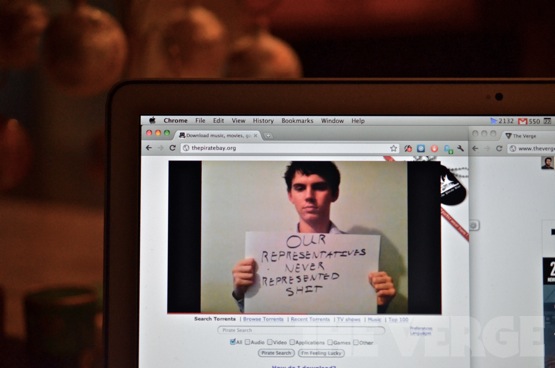
Last week saw a as the House Judiciary Committee opened "markup" hearings, during which amendments are debated and the committee votes whether to bring the bill to the full House of Representatives. For a moment, it appeared as though SOPA co-sponsor (and Judiciary Committee chairman) Rep. Lamar Smith (R-Texas) would breeze through the markup process and hold an easy vote, but SOPA opponents demanded that the committee first bring in technical experts to testify about the impact of the law on the internet — the committee has only heard from content industry representatives until now. The hearings lasted for nearly 12 hours on Thursday and for several more on Friday until they were abruptly adjourned, with Smith promising that they would re-open as soon as possible.
That now looks like , but don't expect the controversy to die down in the meantime — SOPA has been that does serious business online, but I'd expect the content industry to push back just as hard as we get closer to the second set of hearings. At the same time, outspoken SOPA opponents like Rep. Darrell Issa (R-Ca.) will be taking the opportunity to promote the rival OPEN Act, which does away with the DNS redirect provisions of SOPA but still attempts to cut off payments to foreign infringing sites after hearings at the US International Trade Commission. And we'll go through all of this again when PIPA comes up for debate in the full Senate after being unanimously approved in the Senate Judiciary Committee. This battle is far from over.
They're right. Sign a petition, I don't care what petition. Sign one, one about #stopSOPA.
Bạn đang đọc truyện trên: AzTruyen.Top