Teutonic Reich
Name: Teutonic Reich
Foundation: March 3rd, 1924
Founding leader: Kaiser Alaric Stahl I
Bio:
In the aftermath of World War I, the once-mighty German Empire lay in ruins—economically devastated, politically fractured, and socially humiliated. The Treaty of Versailles (1919) not only forced Germany to accept full responsibility for the war, but it also imposed crippling reparations, disarmed its military, and stripped it of territories and colonies. As the Weimar Republic struggled to stabilize a broken nation, hyperinflation, civil unrest, and political extremism tore through the heart of German society.
Amid the chaos, an unlikely movement emerged—not rooted in revenge or radicalism, but in restoration through reform. Led by influential industrialists, war veterans, academics, and pragmatic statesmen, the Reformation Coalition called for the establishment of a new government: one based on merit, discipline, and unity. In 1922, following mass protests and a failed communist uprising in Berlin, the Bundestag was dissolved. In its place, a National Congress convened and, by popular vote and council appointment, declared the formation of the Teutonic Reich in 1924—with Alaric Stahl I crowned as the first Kaiser of the new era.
The Foundation of Order and Meritocracy (1924–1939)
The early years of the Reich were defined by economic revitalization, institutional consolidation, and the building of a new national identity rooted in discipline, science, and civic responsibility. Under the Stahl administration, Germany implemented a universal merit-based civil service system, opening leadership and governmental roles to all qualified citizens, regardless of nobility or heritage.
National industrial expansion programs, emphasizing self-sufficiency and innovation in automotive, steel, energy, and aviation sectors. Educational reforms, promoting engineering, philosophy, civic ethics, and military readiness over traditional aristocratic classics. A strict but fair justice system, overseen by AI-precursors and human judges, eliminating corruption and favoritism.
The Reich also pursued international cooperation, forming trade agreements with neutral powers and extending reconstruction aid to Eastern European nations devastated by the war.
The War That Never Was: Averted World War II (1939–1946)
Unlike the historical Nazi regime, the Teutonic Reich did not pursue racial supremacy or territorial conquest. However, rising threats from abroad forced the Reich to reconsider its neutrality.
In 1939, the Soviet Union invaded Poland, igniting a crisis across Europe. The Reich, committed to regional stability and opposed to ideological extremism, mobilized in defense of Eastern Europe. This marked the beginning of the Second European Conflict (1939–1945) or more commonly known elsewhere as World War II, but never escalating into total war in this timeline.
Operation Wotan (1940): Reich forces launched a successful campaign to liberate Poland and the Baltics from Soviet occupation, using rapid armored thrusts and air superiority.
Mediterranean Defense Pact (1941): Italy's failed attempt at Balkan conquest was halted when Germany allied with Greece and Yugoslavia.
The Moscow Armistice (1945): Following the fall of Stalin's regime, a new democratic Russian government signed an armistice with Germany, ending hostilities in the East.
Rather than punishing the defeated, the Reich oversaw the Eastern Reconstruction Treaty, helping rebuild Ukraine, Russia, and the Balkans into stable states—earning widespread goodwill and solidifying its reputation as a guardian power, not an occupier.
The Golden Technocratic Era (1946–1970)
Post-war Europe flourished under the Reich-sponsored Continental Economic System, fostering collaboration between Central Europe, Eastern Europe, and Scandinavia. The Reich emerged as the anchor of continental stability, modernizing infrastructure, establishing continental research universities, and leading in nuclear fusion, aviation, and early orbital engineering.
And certain milestones that was included was the he launch of Wächter I (1954), Europe's first orbital satellite. Following behind that was the creation of the Central Scientific Assembly (1959), a multinational institution governing AI development, robotics, and nuclear policy. The establishment of the First International Cybernetic Treaty (1963), outlawing certain categories of biological weaponry and enhancing AI ethics protocols.
These years are often referred to as the "Silver Age of Steel" by historians: an era where Germany's influence was earned, not enforced.
The Sino-German War (1972–1980)
The most significant military conflict since 1945, the Sino-German War erupted when the People's Republic of China invaded Alaska and threatened global trade networks across the Pacific. While the Imperial Union of America (IUA)—then still nominally democratic—remained reluctant to engage, the Reich spearheaded a coalition of Asian and European allies to repel Chinese expansion.
Highlights of the war included:
Battle of Mongolia (1974): German and Indian armored divisions halted the advance of Chinese forces and pushed them back through the Gobi Desert.
Siege of Harbin (1977): A year-long urban conflict that introduced autonomous combat units and orbital drone coordination.
Operation Speerfeuer (1980): A joint Indo-German aerial offensive that crippled China's eastern defense network and ended the war.
In 1981, the Chinese Empire collapsed, giving rise to a fractured East Asia, where some states sought Reich alignment while others fell into anarchy—laying the groundwork for future insurgencies.
Cold War with the Imperial Union of America (2000–Present)
In the wake of China's defeat and the Reich's ascension, the United States experienced a radical political and economic transformation. Facing internal collapse, political extremism, and economic strain, the U.S. reformed into the Imperial Union of America (IUA)—a centralized technocratic regime with global ambitions. Fearing the Reich's dominance, the IUA began a covert campaign of:
Territorial expansion into Canada, Mexico, and South America.
Propaganda warfare, painting the Reich as an authoritarian monolith.
Black-ops destabilization campaigns in Africa, India, and Eastern Europe.
Though no full-scale war broke out, the Cold War 2.0 led to dozens of proxy wars, cyber confrontations, and space-based arms development.
Notable moments included:
The Indian Civil War (2041–2046): A major proxy war in which the Reich supported the democratic Bharata Accord and defeated IUA-backed terrorist factions.
The Sub-Saharan Blitz (2047): A Reich-led operation to dismantle African warlords and establish continental sovereignty through reconstruction, winning major public support.
The Global Confederation Summit (2050): Over 60 nations pledged loyalty and partnership to the Reich, forming the Continental Confederation of Free Nations.
Present Day: The Steel Colossus (2050–)
Today, the Teutonic Reich governs a vast coalition of sovereign states across Europe, Asia, Africa, and the Middle East. While not an empire in name, the Reich is undoubtedly the cultural, technological, military, and diplomatic leader of the Eastern world.
Its governance is structured around a meritocratic monarchy, where the Kaiser reigns, but executive power is exercised by a technocratic Chancellor. A High Continental Council, composed of representatives from each Confederation member. A dual-armed military command: the Reichwehr (military) and Verteidigungsrat (Orbital & AI Defense Authority).
Its citizens enjoys universal education, advanced healthcare, and economic stability. As well as protection from crime and terror via quantum surveillance and AI mediation. A deeply embedded culture of civic duty, order, and purpose.
Flag:

Symbol:

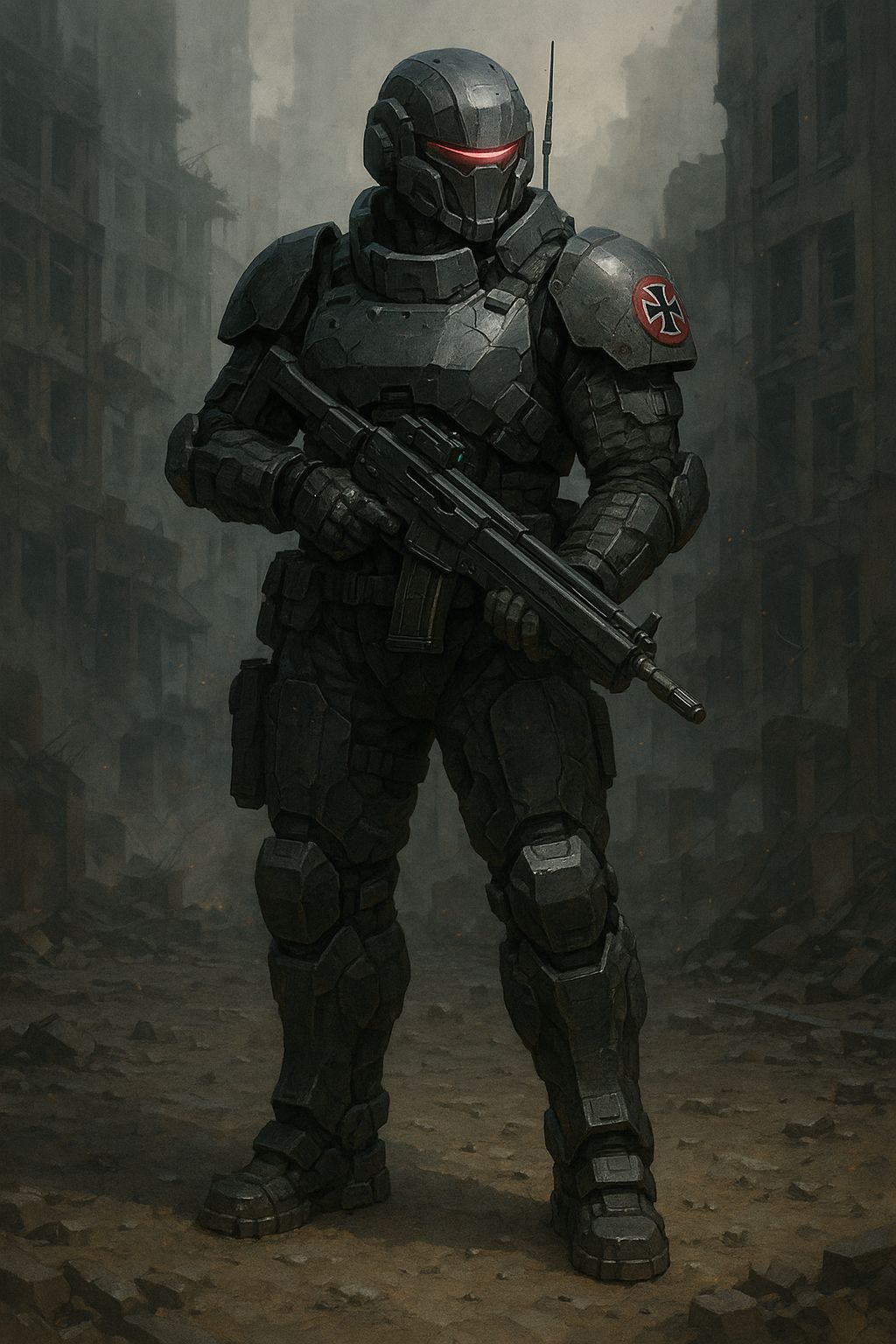
Sturmsoldat Mk. III (Standard Infantry)
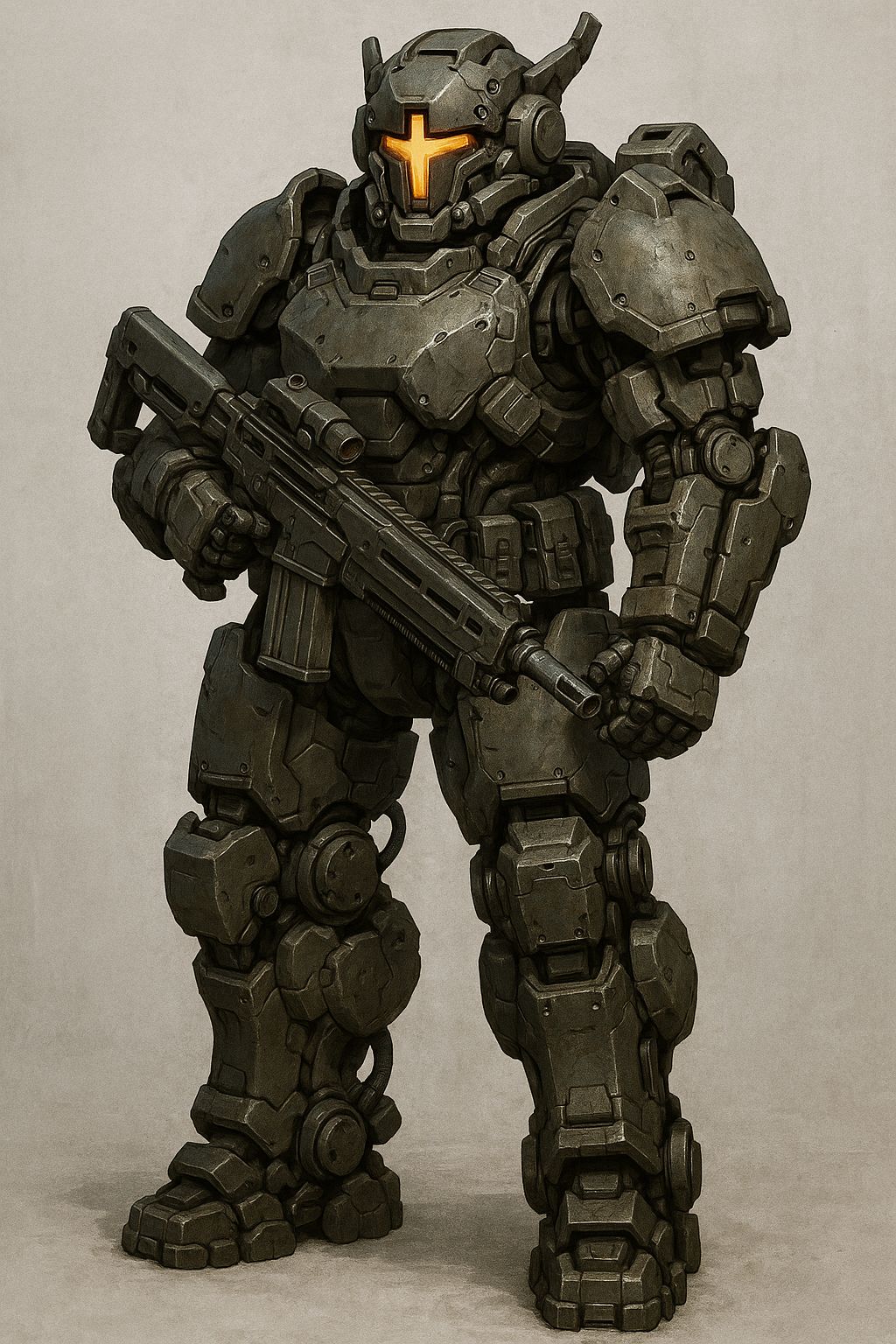
Eisenritter (Iron Knight) Powered Exo-Frame Unit
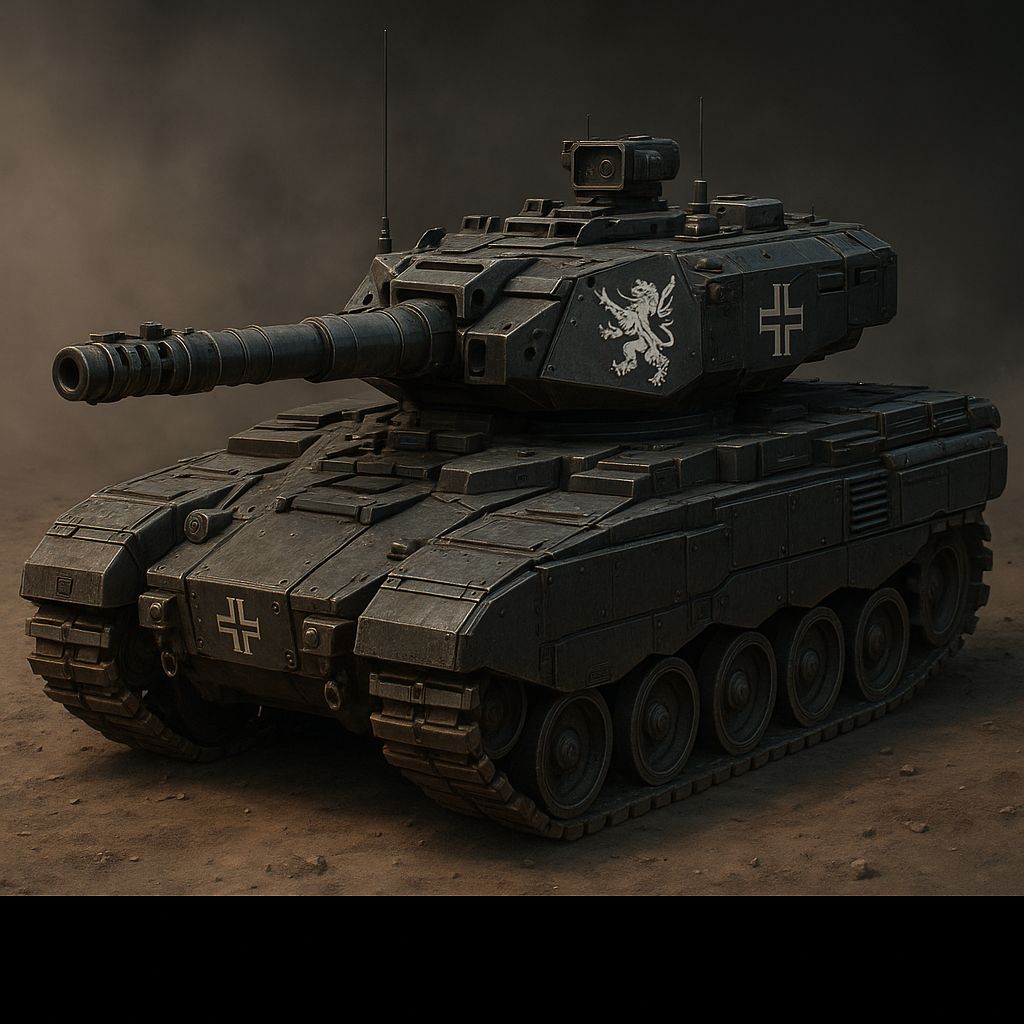
Löwenpanzer X1 (Main Battle Tank)
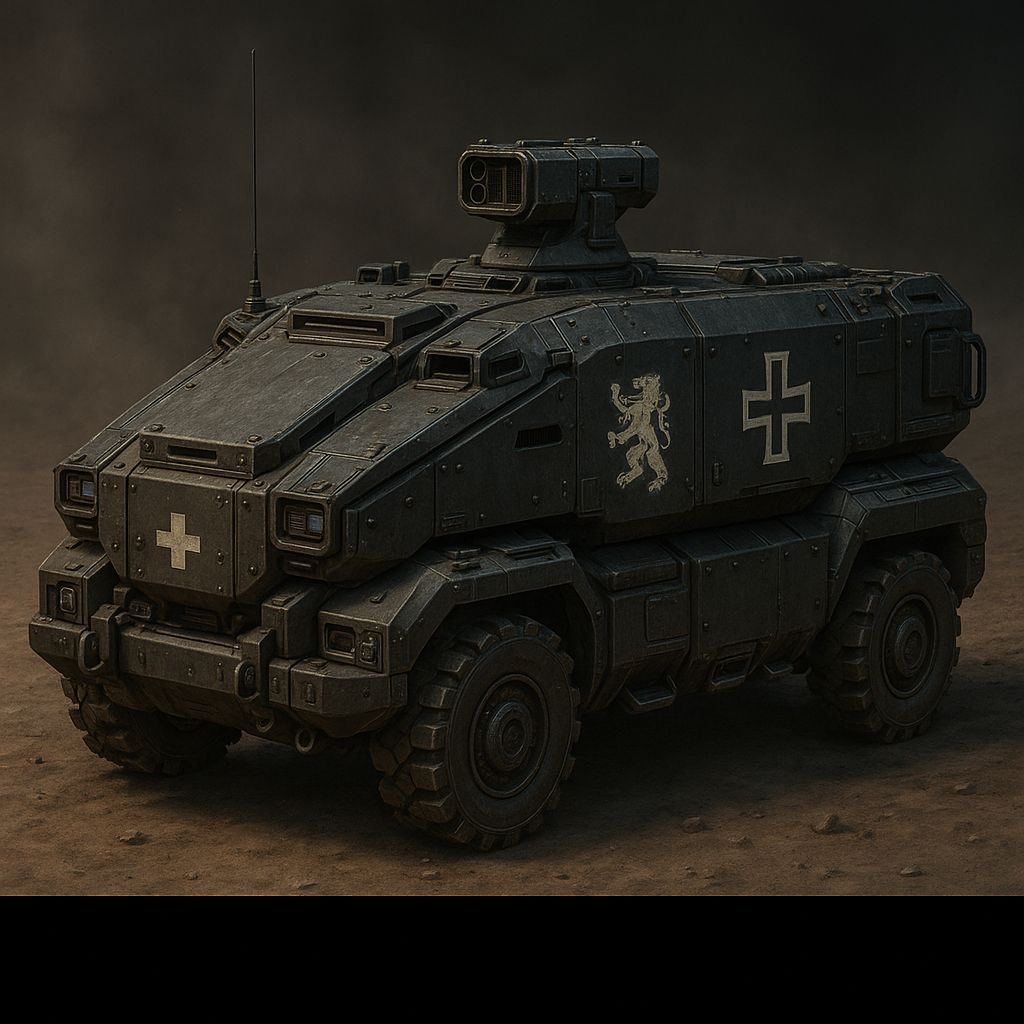
Fenris-Kommando APC
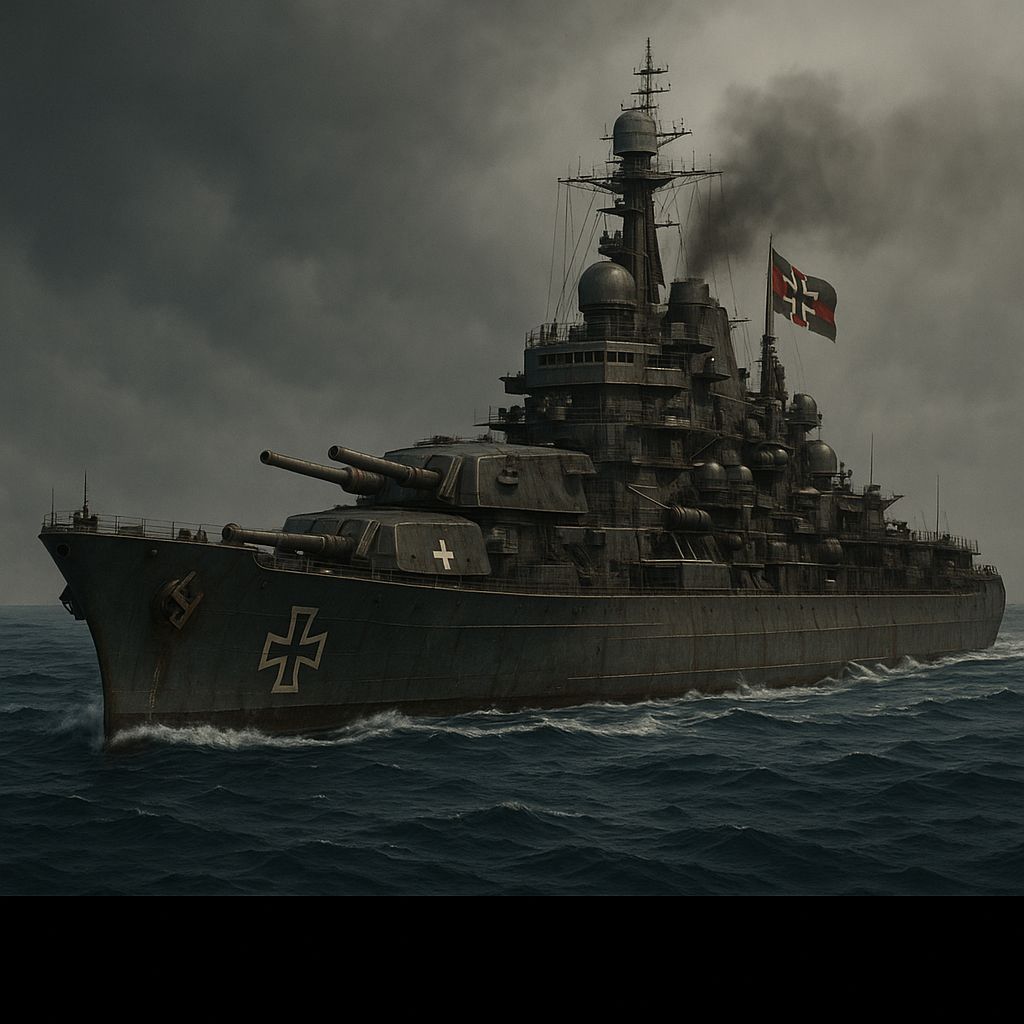
TSN Götterdämmerung (Flagship of the Reich Navy)
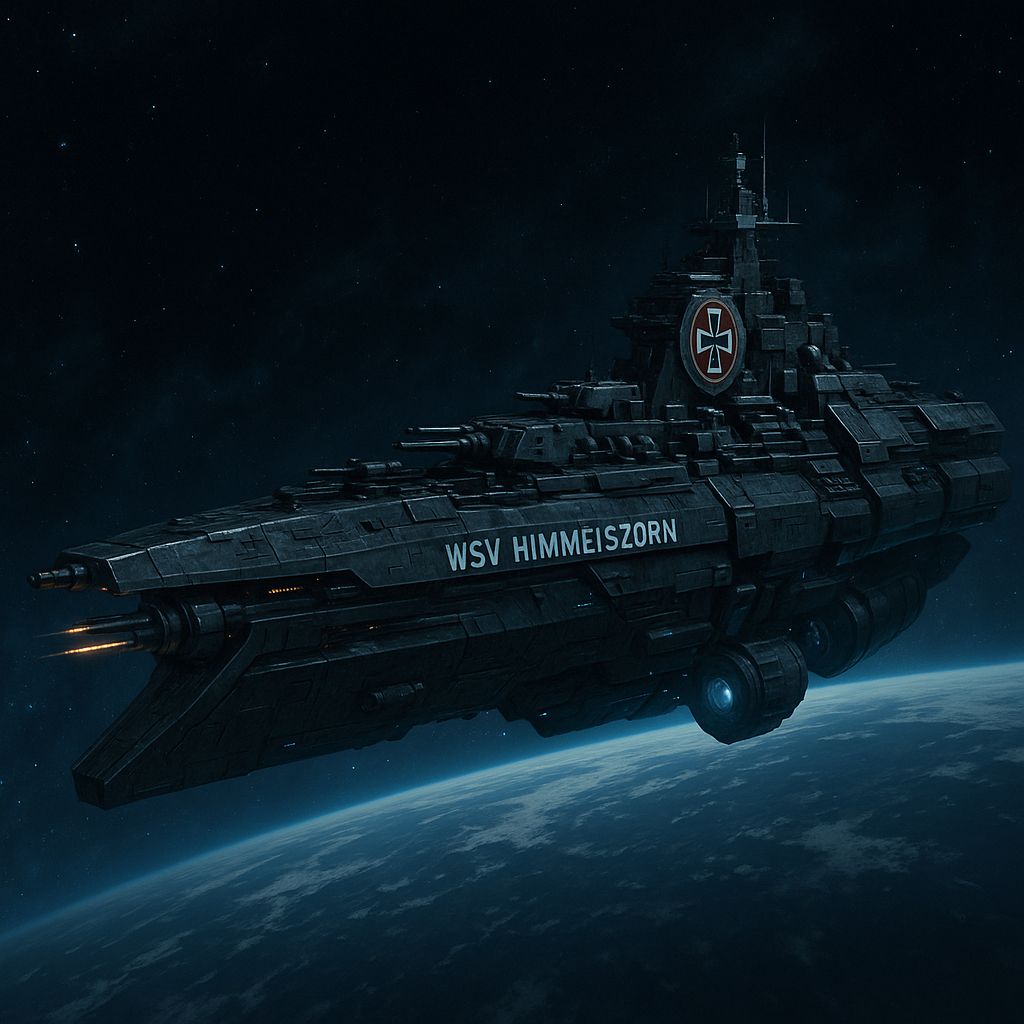
WSV Himmelszorn (Reich Planetary Cruiser)
Bạn đang đọc truyện trên: AzTruyen.Top